
How to Choose Villa Architecture for Your Stay
A villa can have a beautiful pool, exceptional food and attentive service, yet still feel wrong for the holiday you had imagined. The difference often lies in its design. Knowing how to choose villa architecture means looking beyond the photographs and asking how a property will make your family, friends or partner feel from morning to night.
For a restorative escape in Bali or Sri Lanka, architecture is not simply a backdrop. It shapes the breeze at breakfast, the privacy of an afternoon swim, the ease of gathering for dinner and the sense of belonging that turns a stay into a home away from home.
Begin with the feeling you want to take home
Before comparing bedroom counts or styling details, decide what your time away is truly for. A couple marking an anniversary may want quiet corners, flowing indoor-outdoor spaces and a bedroom that feels removed from the rest of the world. A multigenerational family may value a generous central living pavilion, shaded areas for grandparents and bedrooms arranged so everyone has both proximity and privacy.
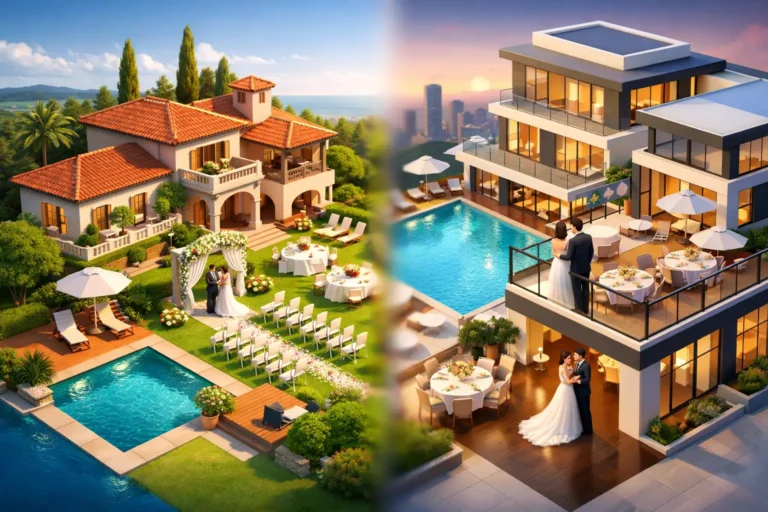
For a birthday celebration or intimate wedding, look for architecture that naturally brings people together without making anyone feel on display. A spacious terrace, a lawn with a beautiful outlook, or a dining pavilion that opens onto the evening air can make a gathering feel effortless. The most memorable settings rarely need excessive decoration. Their proportions, views and atmosphere have already done much of the work.
There is no single best style. The right villa is the one whose rhythm suits your own.
Choose villa architecture that belongs to its setting
Tropical architecture is at its most persuasive when it respects the landscape rather than competing with it. In Bali, that may mean a villa framed by rice fields, jungle or the ocean, with open pavilions that welcome soft morning light. In Sri Lanka, it may mean wide verandas, high roofs and deep shade overlooking palms, gardens or the coastline.
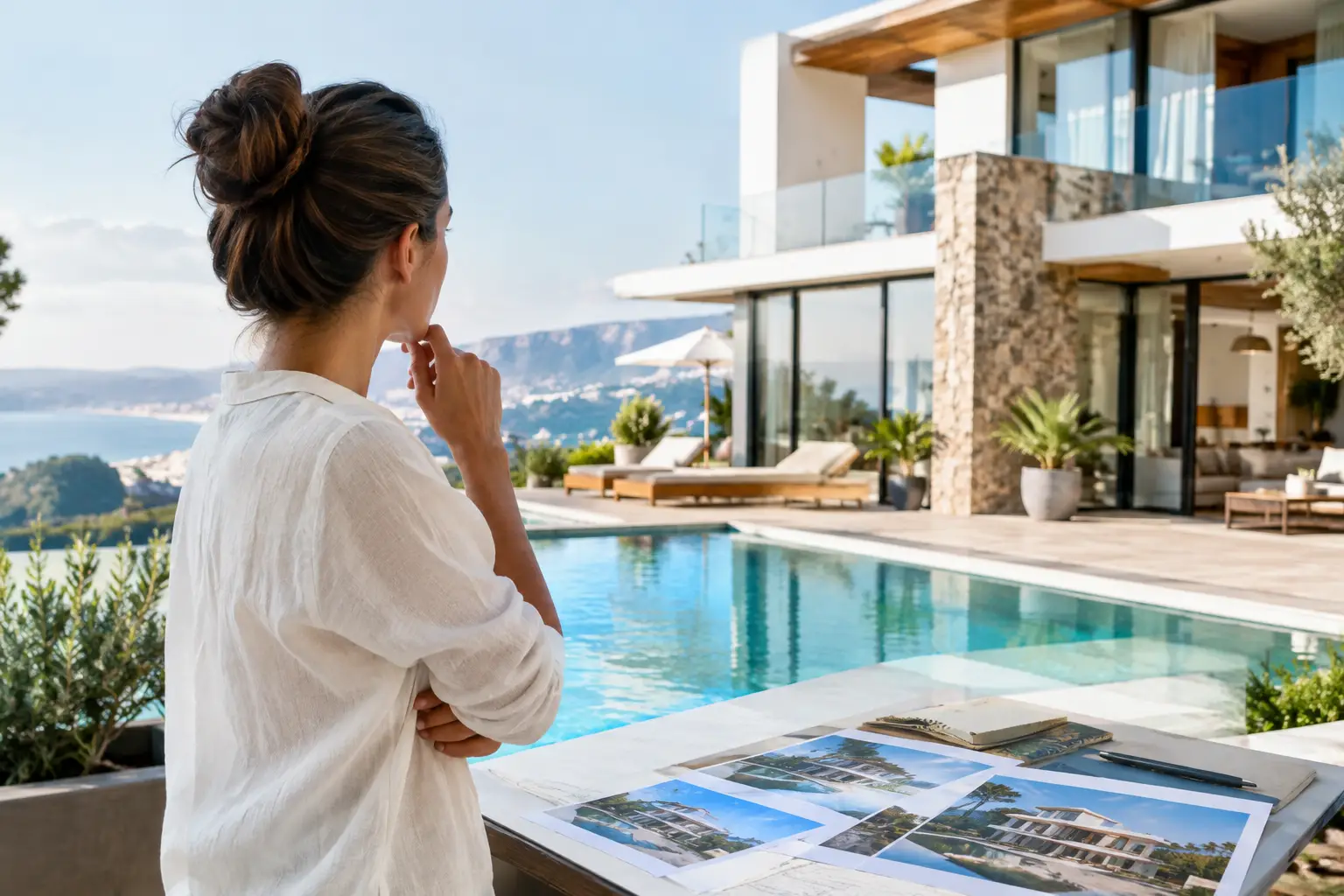
Look closely at how the property meets its surroundings. Are the living spaces oriented towards a view you will genuinely enjoy? Is there shelter from the stronger afternoon sun? Do mature trees, garden walls or the contours of the land create a feeling of seclusion? A panoramic outlook is wonderful, but it becomes more liveable when paired with shade, comfortable places to sit and a sense that the villa has been thoughtfully placed within nature.
Open-sided living areas are particularly appealing in warm climates because they soften the boundary between house and garden. They invite birdsong, the scent of rain and the changing colours of the sky into daily life. However, the balance matters. If you are travelling with young children, older relatives, or anyone sensitive to heat, ensure there are enclosed, air-conditioned rooms where everyone can cool down and rest comfortably.
Let climate guide the decision
A tropical villa should feel airy, not exposed. High ceilings, natural ventilation, covered walkways and broad overhangs are more than attractive details. They help keep spaces comfortable as the day changes, particularly during humid months or a passing tropical shower.
Consider the practical relationship between rooms too. Separate pavilions can provide welcome privacy for couples or extended families, but they may be less convenient if someone has limited mobility or if parents prefer children nearby at night. A single, connected layout can make a group feel more united, while a pavilion-style estate creates the pleasure of retreat. Neither is automatically better – it depends on who is travelling.
Think about life between the bedrooms
Guests often focus first on the bedrooms, yet the shared spaces determine how a villa feels as a group. The best properties create a natural centre of gravity: somewhere people drift towards for coffee, cards, reading, a chef-prepared lunch or a long dinner that continues after sunset.
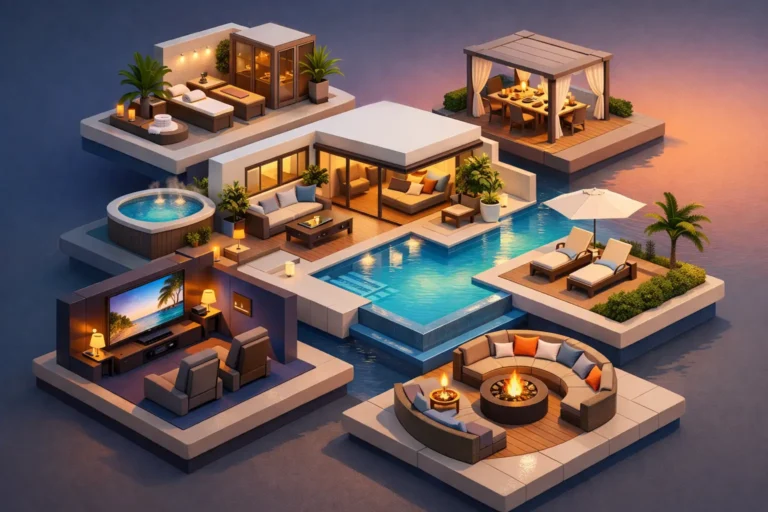
A large dining table under cover is invaluable, especially for family holidays and celebrations. It allows meals to become occasions rather than appointments. A well-proportioned lounge with comfortable seating offers somewhere to gather when the heat is at its peak or rain arrives. Outdoor salas, daybeds and verandas provide gentler places for conversation, where nobody needs to decide whether they are staying in or going out.
When viewing a floor plan or gallery, picture an ordinary day rather than only the arrival moment. Where will breakfast be served? Can one person read quietly while others swim? Is there enough space for a yoga session, a children’s game or a private dinner? Architecture should make togetherness easy, while leaving room for solitude.
Privacy is a design feature, not an afterthought
Privacy means different things to different travellers. For some, it is a villa hidden from neighbouring properties. For others, it is the ability for each guest to close a door, use a private bathroom and rest undisturbed after a sociable evening.
Look for thoughtful zoning. Bedrooms positioned away from the main pool and dining areas tend to feel calmer. Ensuite bathrooms, private terraces and garden screens give guests a sense of their own sanctuary. For groups of friends, comparable bedroom quality matters too. If one room is clearly superior and another feels secondary, it can subtly affect the mood of the stay.
Pool placement deserves particular attention. An infinity pool facing open landscape can be spectacular, while a walled garden pool may offer greater discretion. If you are hosting a celebration, consider whether the pool is safely separate from dining and entertainment areas, particularly where children are involved. If your priority is deep rest, seek a design where pool activity does not dominate every shared space.
Notice materials, craft and a sense of place
A villa does not need to resemble a museum to feel culturally connected. Often, the most elegant homes combine contemporary comfort with local materials and craftsmanship: timber, hand-finished stone, woven textiles, carved details and roofs designed for the local climate.
These choices matter because they create warmth. A home built with natural textures tends to age beautifully and feel grounded, rather than interchangeable with a luxury property anywhere in the world. In Bali and Sri Lanka, architecture can carry a quiet connection to place through its courtyards, gardens, pavilions and relationship with light.
At the same time, do not confuse rustic character with compromised comfort. A refined tropical stay should offer excellent beds, well-designed bathrooms, reliable cooling, considered lighting and enough room to unpack and settle in. The most successful villas allow you to feel immersed in the destination without asking you to sacrifice ease.
Match the design to the service you value
Architecture and hospitality are closely linked. An expansive kitchen and dining pavilion can support memorable private meals. A discreet staff area may allow service to feel attentive without intruding on your time together. A treatment room, peaceful garden nook or shaded terrace can make wellness part of the day rather than an activity you have to schedule.
For celebrations, ask how the villa’s spaces support the people caring for your occasion. Can a chef work comfortably for your group? Is there a graceful route for dinner service? Is there room for musicians, flowers or a small ceremony without overwhelming the property? Good event-friendly design keeps the experience relaxed for hosts as well as guests.
This is where a privately owned villa with an experienced on-site team can feel especially personal. At Ambalama Villas, the intention is not simply to provide beautiful rooms, but to create the ease of being cared for in a place that still feels entirely your own.
Ask the questions photographs cannot answer
Images are useful, but they capture a brief, flattering moment. Before booking, ask about the practical details that affect comfort. Find out whether all bedrooms are air-conditioned, whether there are covered areas in wet weather, how far rooms are from one another, and whether the property is suitable for guests with mobility needs.
It is also wise to ask about sound. A villa near the coast may have waves and wind; a rural property may bring birds, frogs and the gentle life of the tropics. These sounds can be part of the charm, but expectations should be clear. Similarly, ask how private the outdoor spaces are, whether there are neighbouring villas nearby and how the team maintains quiet during your stay.
The most useful question may be the simplest: how will this house work for our particular group? A thoughtful host can often explain the lived experience of a villa far better than a floor plan alone.
A beautifully chosen villa gives each moment somewhere to land: a sunrise coffee with a view, a slow afternoon beneath the palms, a table full of people you love, and a peaceful room waiting at the end of the day. Choose the architecture that makes those moments feel natural, and the destination will begin to feel like your own little piece of paradise.