

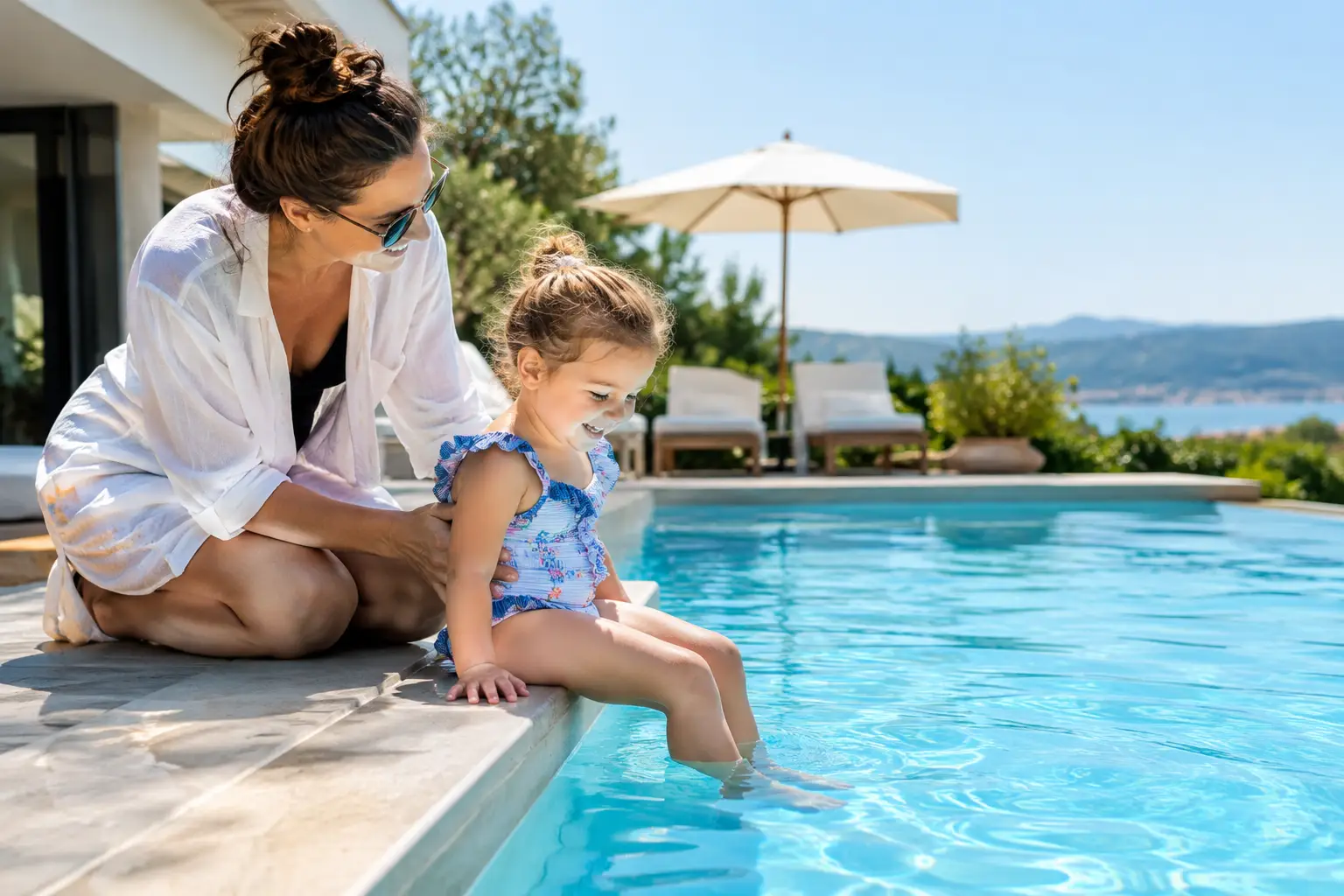
Are Villa Pools Child Safe? A Parent’s Guide
A private pool can become the heart of a family holiday: early-morning splashing before breakfast, unhurried afternoons beneath the palms, and children falling asleep happily tired after a day outdoors. But are villa pools child safe? The honest answer is that no pool is safe without attentive adults and sensible safeguards. The right villa, clear family routines and close supervision can, however, make pool time feel relaxed rather than anxious.
For many parents, especially those travelling with several generations, a private villa offers a gentler rhythm than a busy hotel. There is room for little ones to play, grandparents to settle in with a book, and everyone to gather without competing for a sunbed. That privacy also means the family takes a more active role in pool safety. There may be no lifeguard watching from the side, so preparation matters.
Are villa pools child safe by design?
A beautiful pool is not automatically a child-friendly one. In tropical villas, pools are often designed to frame a view, flow into a garden, or sit beside open living spaces. These details create the sense of a little piece of paradise that makes a private stay so special, but they can also give curious children easy access to water.
Safety depends on the individual property, the ages and confidence of the children, and the measures put in place during the stay. A shallow step or ledge can be helpful for supervised play, while a deep infinity edge, a pool immediately outside a bedroom, or an unfenced water feature calls for greater care. Babies and toddlers need a different level of protection from capable older swimmers, yet both still need an adult nearby.
When choosing a villa, ask direct questions before booking. Is there a pool fence or removable barrier available? Can the pool be covered securely when not in use? Is the water visible from the main living area, and are gates or doors leading towards it fitted with reliable locks? It is also worth asking about the depth profile, steps, slippery surfaces, pool lighting and any ponds or unfenced features elsewhere in the grounds.
A thoughtful host will welcome these questions. Luxury should feel considered and personal, not leave parents guessing. At a private stay, the most reassuring service often begins before arrival, when the team understands who is travelling and what would help everyone feel at ease.
The safeguards that make the greatest difference
Physical barriers are the first line of defence for young children. A properly installed pool fence with a self-closing, self-latching gate creates valuable separation between a child and the water. It is not a replacement for supervision, but it provides time: time to notice a child has wandered, time to respond, and time to prevent a frightening moment from becoming an emergency.
A pool cover can add another layer, although parents should establish whether it is designed as a safety cover rather than simply a cover for leaves and heat retention. The distinction matters. Lightweight floating covers can create their own hazard if a child becomes entangled or tries to walk across them. Never assume that a cover can bear weight unless the villa has confirmed its purpose and use.
Doors, gates and the layout of the villa also deserve attention. Open-plan tropical living is wonderfully airy, but it can make it easier for a quick child to slip outside unnoticed. Keep access doors closed when the pool is not in use, place furniture away from gates that a child could climb, and agree that older children should not open the pool gate for younger siblings.
Inflatable armbands, noodles and floats are enjoyable playthings, not safety equipment. If a child cannot swim confidently, use a properly fitted buoyancy aid when appropriate and keep an adult within arm’s reach. This is particularly relevant in a destination setting, where children may be more excited, tired from travel, or tempted to spend longer in the water than usual.
Make supervision a shared family ritual
The calmest pool days tend to have one simple rule: one named adult is actively watching. In a multigenerational group, it is easy for everyone to assume somebody else has the children covered. A clear handover avoids that gap.
Active supervision means more than being somewhere nearby. The supervising adult is poolside, alert and not reading, scrolling, preparing lunch or having a long conversation. For younger children and weaker swimmers, they are close enough to reach them immediately. If that adult needs to step away, another adult consciously takes over.
This need not make the holiday feel regimented. It can be as simple as saying, “I’m on pool watch until lunch,” then handing over to a partner, grandparent or trusted friend. During a long, lazy afternoon, that shared rhythm lets everyone enjoy their own moment of restoration while children remain properly seen.
Consider setting a few family agreements on the first day: no swimming without an adult; no running on wet stone; no pushing or holding anyone underwater; and no poolside games after dark unless an adult has checked the lighting and is present. Keep the language positive and age-appropriate. Children respond well when they understand that these rules protect the fun, rather than take it away.
Choose confidence over assumptions
A holiday is not always the moment to discover what a child can manage in deep water. Before travelling, be realistic about each child’s swimming ability. A child who swims comfortably in a familiar, heated pool may react differently in a large outdoor pool, particularly where depth changes quickly or sunlight makes it harder to judge the bottom.
Arrange swimming lessons well ahead of departure if possible, but do not let a badge or a few lessons create false confidence. Even strong swimmers can become distressed through fatigue, horseplay, cramps or a sudden fright. Younger children can slip beneath the surface quietly, which is why watchful adults matter more than a child’s apparent confidence.
It is wise to have a first-aid kit close to the pool and to know where the nearest phone is kept. On arrival, ask the villa team how to contact them quickly and where local medical support is located. This is not about anticipating the worst. It is the same quiet preparation that allows a host to relax into a well-planned celebration.
Arrival day deserves extra care
The first hours in a villa are often the most chaotic. Luggage is being unpacked, adults are admiring the view, children are eager to explore every corner, and everyone may be tired after a flight. Before anyone changes into swimwear, take the children on a short pool walk-around.
Point out the pool boundaries, steps, deeper areas and any surfaces that become slippery. Decide where towels, hats and drinking water will go so the poolside does not become cluttered. If a removable fence, gate alarm or other child-safety feature has been arranged, check that it is in place and being used as expected before settling in.
Sun, humidity and jet lag can change behaviour too. Build in shade, regular water breaks and quieter time away from the pool, particularly for toddlers. A child who is overtired is less likely to listen carefully and more likely to take risks. A slower holiday pace is not a compromise in a villa setting. It is often the very reason families choose one.
Safety should still leave room for joy
The aim is not to turn a tropical escape into a set of restrictions. It is to create the conditions for easy, wholehearted time together. When adults know the pool layout, children understand the rules, and safeguards are working in the background, the atmosphere can stay exactly as it should be: warm, spacious and carefree.
For families considering a private stay at Ambalama Villas or elsewhere in Bali and Sri Lanka, raise pool safety needs at the earliest stage of planning. Share the children’s ages, swimming experience and any particular concerns. Personal hospitality is most meaningful when it anticipates the details that help a family feel at home.
Then, once the practical arrangements are in place, let the pool return to what it ought to be: a place for laughter, confidence-building and the kind of unhurried family memories that stay long after the holiday ends.