
What Makes a Sustainable Luxury Villa Holiday?
The most memorable tropical stays rarely announce themselves with grand gestures. They stay with you because the morning air feels clean, the garden is alive with birdsong, your meals taste of the place you have travelled to, and the villa itself seems to belong to its setting rather than compete with it. That is the quiet appeal of a sustainable luxury villa holiday – a stay that offers genuine comfort and beauty while treating its surroundings with care.
For many travellers, luxury once meant excess. Bigger spaces, more consumption, more spectacle. That idea is changing. Privacy, stillness and personal service remain deeply desirable, but there is growing appreciation for places that offer these pleasures with a lighter touch. A villa can feel indulgent and restorative without being wasteful, and in destinations as naturally rich as Bali and Sri Lanka, that balance matters.
Why a sustainable luxury villa holiday feels different
A truly luxurious stay is not only about what is provided. It is also about how a place makes you feel. When a villa is designed with sensitivity to landscape, climate and local culture, the experience becomes softer and more grounding. Breezes move naturally through open spaces. Materials feel authentic rather than overly polished. Gardens are not simply decorative, but part of the atmosphere of calm.
This is where sustainability improves the guest experience rather than limiting it. Good design reduces the need for constant artificial cooling. Thoughtful water use protects the surrounding environment that guests have come to enjoy. Locally sourced food often tastes better because it is fresher and more connected to the region. None of this needs to feel worthy or instructive. When it is done well, it simply feels more comfortable, more considered and more in tune with the destination.
There are, of course, trade-offs. Not every eco-conscious choice looks overtly glamorous, and not every property claiming sustainability has the same standards. Some villas focus on architecture and energy use, while others excel in community connection or food sourcing. A discerning guest should expect nuance rather than perfection.
The hallmarks of sustainable luxury villa holidays
The phrase can be used loosely, so it helps to look beyond surface language. A meaningful sustainable luxury villa holiday is usually shaped by several choices working together.
Design that respects the setting
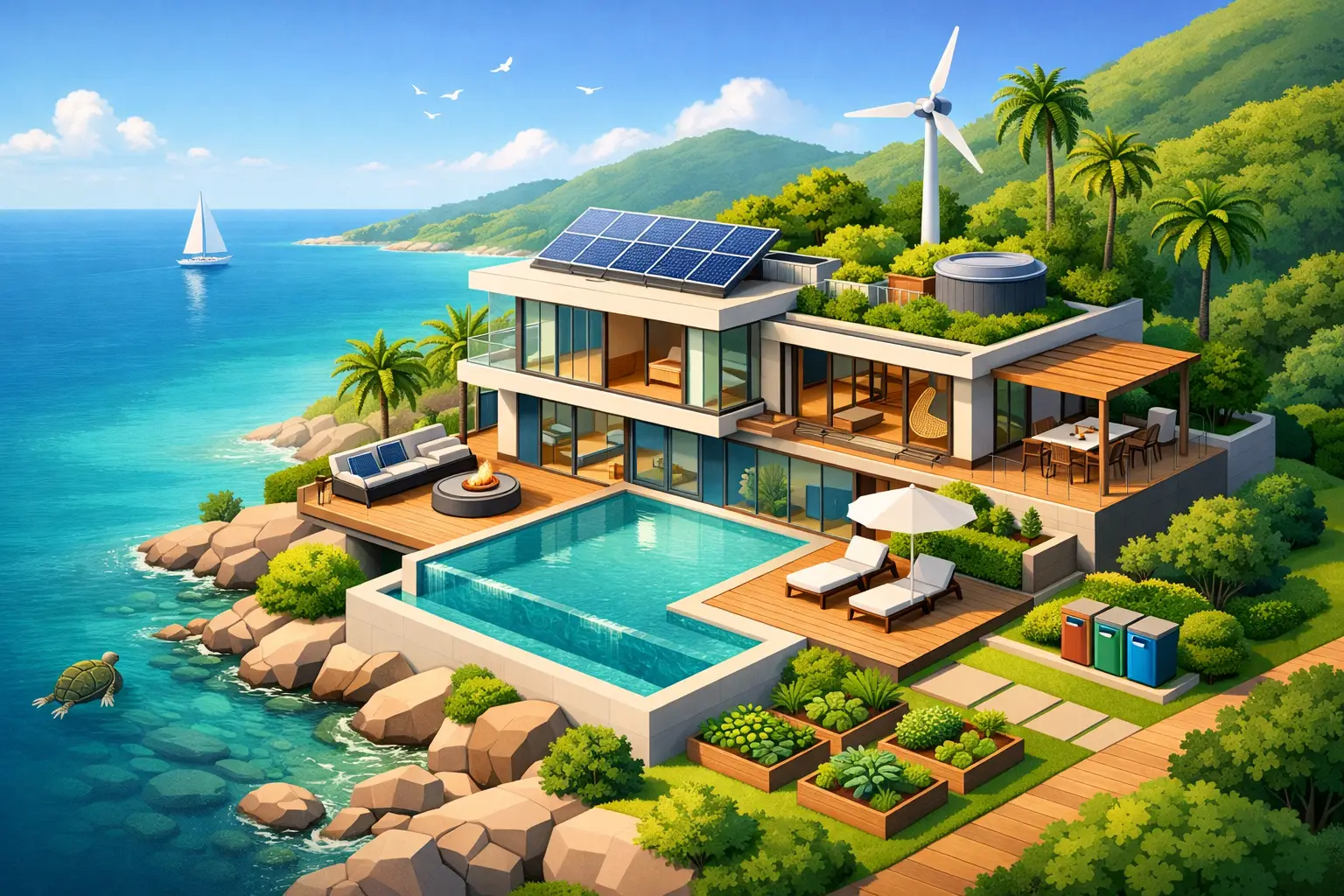
The best villas do not feel dropped into the landscape as an afterthought. They respond to it. In tropical destinations, this may mean open-plan living areas, deep shade, natural ventilation and materials suited to humidity and heat. These design decisions can reduce energy demand while creating the easy elegance guests actually want on holiday.
Architectural restraint matters too. A villa does not need to dominate a cliffside or flatten a garden to feel exclusive. In fact, a stronger sense of sanctuary often comes from allowing the natural setting to remain the main attraction.
Service without waste
Luxury is often measured in attentiveness, and rightly so. Yet attentive service does not require endless single-use plastics, excessive laundering or unnecessary abundance. A well-run villa can offer beautifully prepared rooms, chef-led dining and discreet staff care while still being measured in its use of resources.
This may show up in refillable bathroom amenities, thoughtful housekeeping schedules, filtered water rather than disposable bottles, or menus that adapt to seasonal ingredients. Guests still feel looked after. The difference is that care extends beyond the guest to the place itself.
Food with a sense of place
Dining is one of the clearest expressions of sustainable hospitality. When ingredients come from local growers, nearby fisheries or the villa’s own garden, meals feel fresher and more rooted. There is pleasure in eating fruit that was picked close by, or a curry prepared with regional knowledge rather than generic international styling.
That does not mean every ingredient must be local at all times. Some destinations have limits, seasons and supply fluctuations. The point is intention. A villa that values provenance tends to create meals with more flavour and more meaning.
A relationship with the local community
The most convincing properties understand that sustainability is social as well as environmental. Employing local staff, working with nearby artisans, respecting traditions and supporting local enterprise all contribute to a more generous form of luxury.
Guests feel this in subtle ways. Service becomes more personal. Interiors avoid the blandness that can affect international luxury spaces. Recommendations carry real insight. Instead of hovering outside the destination, the villa becomes part of it.
Luxury and sustainability are not opposites
There is still a lingering assumption that sustainability asks guests to compromise. In practice, the opposite is often true. The qualities travellers prize most in a private villa – space, privacy, calm, beautiful surroundings, excellent food and restorative rest – are all strengthened when a property is managed with care.
What does feel less luxurious now is waste for its own sake. Disposable convenience, overbuilt spaces and generic opulence can feel strangely hollow, particularly for guests who travel precisely to reconnect with what feels real. A tropical sanctuary should not insulate you from the destination. It should bring you closer to it, gently and beautifully.
That said, standards matter. Sustainability should never become an excuse for poor maintenance, reduced comfort or patchy service. Affluent travellers are right to expect both conscience and quality. A good villa understands that these are not competing priorities.
How to choose the right villa for your holiday
If you are planning a sustainable luxury villa holiday, it is worth reading between the lines. Marketing language can sound polished, but the most meaningful signs are often specific.
Look for evidence of considered architecture, not just decorative eco language. Notice whether a property speaks clearly about water, energy, sourcing or community involvement. Pay attention to the atmosphere in guest reviews. People may not use the word sustainable, yet they often describe its effects: peaceful grounds, thoughtful staff, fresh food, a strong sense of place, and a stay that feels calm rather than overproduced.
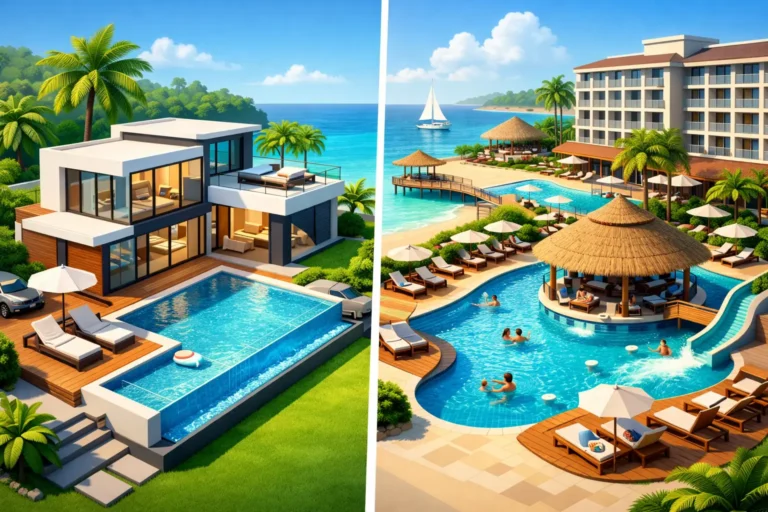
It also helps to match the property to the purpose of your trip. A couple seeking quiet restoration may value different features from a multigenerational family gathering or an intimate wedding celebration. Larger villas can be especially sensible from a sustainability perspective when shared among several guests, as the footprint per person is often lower than multiple separate suites or hotel rooms. But that only works if the villa remains well managed and genuinely suited to group comfort.
In Bali and Sri Lanka, this question becomes especially interesting. Both destinations offer extraordinary natural beauty, rich cultural traditions and a slower rhythm that lends itself to restorative travel. They also face the pressures that come with popularity. Choosing a villa that protects privacy while honouring place is not only good for the destination – it tends to create the more memorable stay.
At its best, this is what brands such as Ambalama Villas understand intuitively: that five-star comfort feels even more special when it carries the warmth of a home away from home and the quiet confidence of a property that knows how to care for its surroundings.
A more personal way to travel well
There is something deeply reassuring about arriving somewhere beautiful and sensing that nothing is forced. The views are not overengineered. The service is gracious rather than performative. The meals are generous but not wasteful. The villa offers space to celebrate, rest and reconnect, yet remains respectful of the landscape and community around it.
That is the real promise of sustainable luxury villa holidays. Not guilt-free indulgence, which is too simplistic, but a more thoughtful kind of pleasure. One that asks less of the destination while giving more back to the guest.
For travellers who want privacy without isolation, comfort without excess and beauty with substance, this approach feels less like a trend and more like the future of exceptional hospitality. When your holiday leaves you restored, and the place itself seems no poorer for your having been there, that is luxury worth seeking out.