

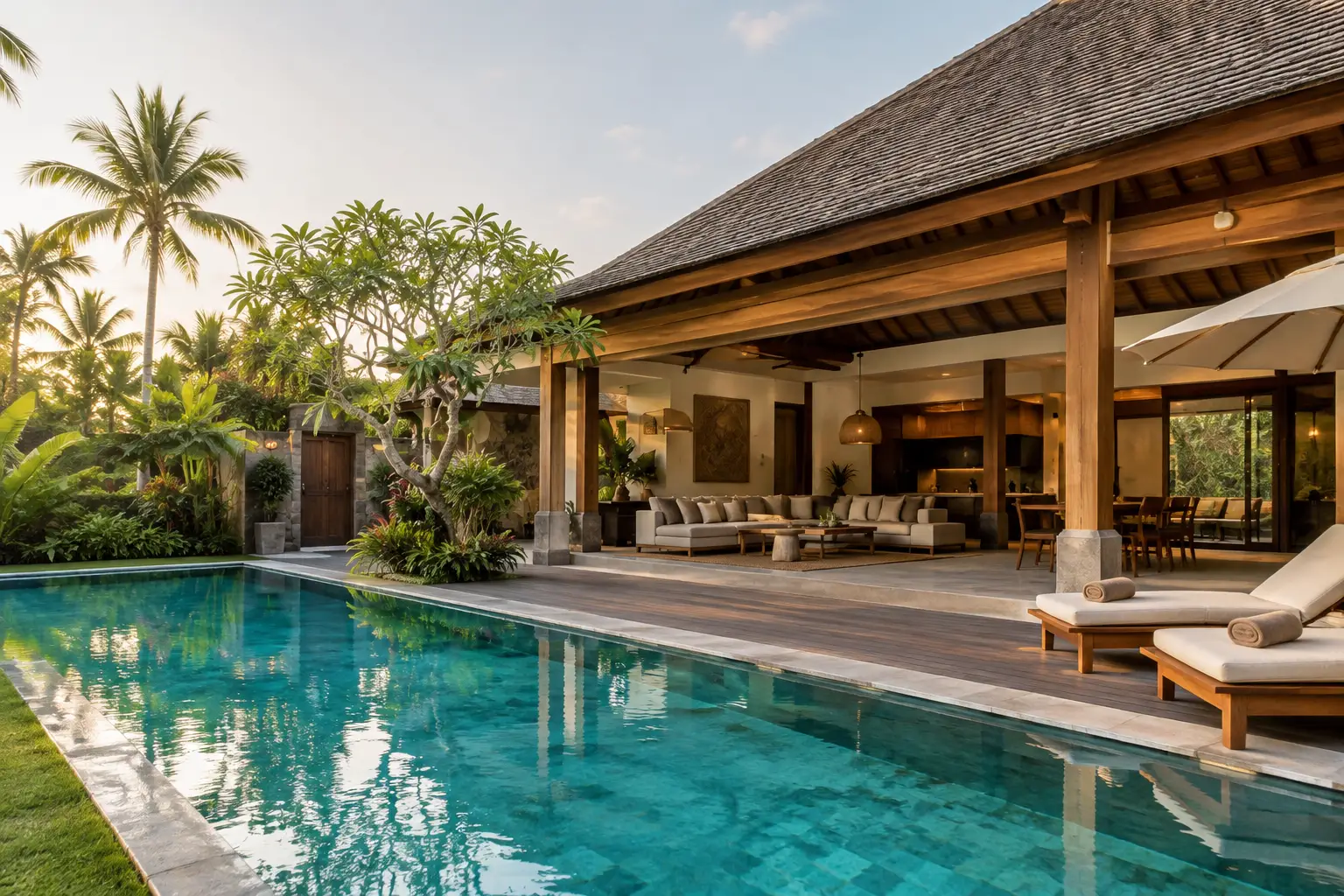
Bali Villa Architecture That Feels Like Home
A villa can have an infinity pool, polished stone and a beautiful view, yet still feel like a place one merely passes through. The best Bali villa architecture creates something more lasting: the gentle sense that the landscape, the house and the people within it belong together. It offers the rare luxury of space to breathe, gather, rest and be entirely at ease.
For travellers arriving from busy cities, this feeling matters as much as any design detail. A thoughtfully made villa does not place comfort indoors and nature outdoors as separate experiences. It lets the first morning light reach the living space, frames a canopy of palms beyond the pool and creates shaded corners where the afternoon can unfold slowly. This is architecture designed not just to be seen, but to be lived in.
Bali villa architecture begins with the land
Bali’s most memorable homes respond to their setting rather than competing with it. Whether a villa sits among rice fields, above the ocean or within a tropical village, its design should honour the slope, prevailing breeze, mature trees and changing light. The view may be the first thing guests notice, but a genuine connection with the site is what makes a stay restorative.
This is why generous openings, covered terraces and open-sided pavilions are so characteristic of island living. They allow the villa to receive the landscape without sacrificing a feeling of shelter. A dining table beneath a high timber roof can feel both grand and intimate when it looks out towards the garden. A bedroom opening to a private courtyard can offer a deeper kind of luxury than an oversized room sealed behind glass.
There is a balance to strike. Complete openness can be glorious on a still morning, but less comfortable during heavy rain, strong wind or a humid night. The finest villas use architecture to give guests choice: wide doors that can be folded back, deeply shaded interiors, quietly efficient cooling and enclosed rooms when privacy or calm is needed. Freedom is most enjoyable when comfort is never compromised.
The enduring influence of Balinese design
Traditional Balinese compounds are not typically arranged as one imposing building. Instead, a series of pavilions is placed within a walled garden, with spaces for sleeping, gathering, cooking and ceremony connected by paths and courtyards. This relationship between individual structures, open air and communal life continues to shape contemporary villas across the island.
The influence is not simply decorative. Carved timber, local stone and thatched roofs can be beautiful, but they mean more when they support the way a home is used. A central pavilion encourages unhurried meals and conversation. A garden path turns moving from bedroom to breakfast into a small daily ritual. Water features soften sound and draw the eye towards greenery, creating an atmosphere of quiet retreat.
This approach is especially suited to multigenerational holidays and celebrations. Parents can enjoy time by the pool while children have room to play nearby. Friends can gather for a long dinner without being confined to a restaurant table. Grandparents can retreat to a peaceful bedroom suite while remaining part of the shared experience. Architecture becomes a gracious host, bringing people together without asking them to occupy every moment in the same way.
Rooms with a sense of occasion
A private villa should feel generous without becoming formal. Ceiling height, proportion and natural materials play an important part here. A lofty living pavilion can give a dinner or celebration its sense of occasion, while soft furnishings, warm lighting and the presence of the garden ensure it remains welcoming.
The most successful layouts also understand that togetherness needs privacy around it. Suites should feel sufficiently separated for couples, friends or family members to settle into their own rhythm. Bathrooms, dressing areas and terraces deserve the same attention as public spaces, particularly during longer stays. When everyone has a private sanctuary to return to, shared time feels lighter and more enjoyable.
Light, air and water shape the day
In tropical architecture, the day is felt through light and air. At dawn, a villa may be filled with the pale green of the garden and the sound of birds. By midday, its shaded spaces become a refuge from the heat. In the evening, lanterns, pools and the glow of an open kitchen create a softer mood for dinner and conversation.
Good design anticipates these transitions. It uses overhanging roofs and verandas to temper direct sun, positions seating to catch breezes and provides places to linger at every hour. Rather than relying on a single dramatic room, it offers a sequence of experiences: morning coffee on a terrace, reading in a shaded bale, a swim before lunch, sunset drinks beside the pool and a chef-prepared meal under the stars.
Water often anchors this rhythm. A pool is naturally a place for play and relaxation, but its position has a practical effect too. When it runs alongside a main pavilion, the reflected light can make a living area feel cooler and brighter. When it faces a valley, jungle or ocean horizon, it creates a long, quiet line between the villa and its surroundings. The best pool settings feel integrated, not added as an afterthought.
Materials that grow more beautiful with time
A tropical villa is judged differently from an urban home. Materials must withstand sun, salt air, rain and humidity, yet they should also retain warmth and character. Natural stone underfoot, hand-finished timber, woven textures and terracotta tones tend to age with a grace that glossy, highly engineered finishes cannot always match.
That does not mean every surface must be rustic. Contemporary Bali villa architecture can be clean-lined and refined, with considered concrete, glass and metal. What matters is the conversation between modern comfort and local materiality. A minimalist form feels more grounded when softened by timber screens or volcanic stone. A traditional thatched roof can sit beautifully above an elegant, contemporary interior.
Craft also gives a villa emotional texture. Hand-carved doors, woven lampshades and locally made ceramics carry the human presence of the island into everyday moments. These are not ornaments to be collected. Chosen with care, they help a home feel personal, calm and rooted in place.
Privacy is a form of luxury
For many guests, true luxury is not being watched, hurried or required to share a poolside with strangers. It is the ability to wake slowly, take breakfast in peace and let the day follow its own pace. Architecture protects this feeling through thoughtful orientation, planting, courtyard walls and transitions between arrival spaces and private living areas.
Privacy should never mean isolation. A well-designed villa can remain open to a far-reaching view while shielding bedrooms and bathing areas from neighbouring sightlines. It can create a lively entertaining space that does not disturb those seeking rest. This is particularly valuable for weddings and family gatherings, where the energy of celebration needs to coexist with moments of stillness.
At Ambalama Villas, this balance supports the feeling of a home away from home: generous places to come together, paired with the quiet assurance that every guest has room of their own.
Architecture that makes room for restoration
Wellness in a villa is rarely about a single treatment room or a carefully staged photograph. It comes from how the spaces allow guests to feel. A daybed placed in cooling shade invites an afternoon nap. A bathroom that opens onto a planted courtyard makes even a simple shower feel unhurried. A yoga deck facing the horizon encourages a slower start to the day.
For some travellers, restoration means silence and solitude. For others, it means cooking with family, sharing stories after dinner or celebrating a milestone in a setting that feels deeply personal. The most thoughtful villas accommodate both. Their beauty is not distant or untouchable. It is a beauty that welcomes bare feet, long lunches, children’s laughter and the comforting ease of being together.
When choosing a villa in Bali, look beyond the headline view and consider how the home will hold the shape of your stay. Notice where you will drink your first coffee, where everyone will gather after a day out, and where you can retreat when you need quiet. The right architecture does not ask you to admire it from afar. It gives your holiday a little more space to become meaningful.